
|
Discover best casinos, get bonuses. 
|

Sources
| The following is a list of the principal sources used in creating the content of this website. |
Pick Yourself Up: Dorothy Fields and the American Musical
|
A radio interview with Charlotte Greenspan can be heard here. |
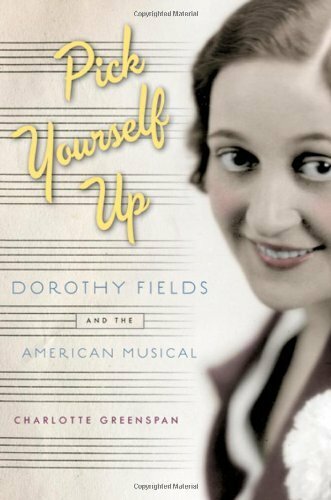 This new biography, published by Oxford University Press as one of the first titles in their Broadway Legacies series is the most detailed account yet of Dorothy Fields' life and work.
On The Sunny Side of the Street by Deborah Grace Winer
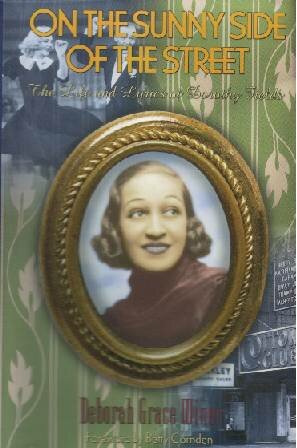 The primary reference book on Dorothy Fields until publication of Greenspan's biography in 2010, and consequently the source for much of the material on this website is On The Sunny Side of the Street by Deborah Grace Winer. The primary reference book on Dorothy Fields until publication of Greenspan's biography in 2010, and consequently the source for much of the material on this website is On The Sunny Side of the Street by Deborah Grace Winer.Published in 1997, the book contains a wealth of material on Dorothy's life and work. The author conveys a clear picture of her subject's upbringing and later lifestyle, but Dorothy's character remains somewhat veiled; the reader is left with the impression of someone kindly, charming and urbane, but with nothing clearer than that. This one reservation aside, I would recommend the book wholeheartedly. Winer packs a great deal of information into the text, while maintaining readability. Many of the anecdotes are fascinating, and there are hundreds of wonderful illustrations of the subject, her family and friends, and of her films and shows. The lyrics to several songs are quoted in full; however since this is principally a biography, there is little detailed analysis of her work. The book is published by Schirmer Books. |
Ethan Mordden
|
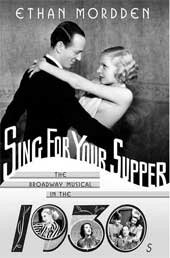
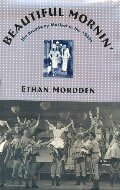
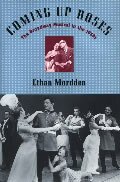
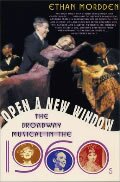
Ethan Mordden is an authority on the Broadway musical. Among his most recent publications are four books each of which concentrates on Broadway musicals from a different decade: the 1920s, the 1930s, the 1940s, the 1950s and the 1960s.
Extensive research, breadth of knowledge, a confidence in his own opinions and writing skills of a high order enable Mordden to bring a succession of Broadway flops and triumphs to life. The books covering the 30s to the 70s contain peachy descriptions of Fields' shows as follows:
|
Max Wilk : They're Playing Our Song
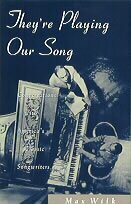 Max Wilk has written several books on popular song and songwriters. This work is a unique collection of interviews he carried out with the greatest American songwriters, mostly in the 1960s and 1970s. The Dorothy Fields interview is particularly interesting - the reader gains an impression of her personality, and there are several great anecdotes. Max Wilk has written several books on popular song and songwriters. This work is a unique collection of interviews he carried out with the greatest American songwriters, mostly in the 1960s and 1970s. The Dorothy Fields interview is particularly interesting - the reader gains an impression of her personality, and there are several great anecdotes.This book is highly recommended. |
Henry Kane: How To Write A Song
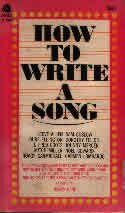 This book, published in 1962, consists principally of interviews with 10 successful songwriters. Dorothy Fields is one of them, along with Johnny Mercer, Hoagy Carmichael and Noel Coward. This book, published in 1962, consists principally of interviews with 10 successful songwriters. Dorothy Fields is one of them, along with Johnny Mercer, Hoagy Carmichael and Noel Coward.The interviews focus on advice for budding songwriters. Kane writes well (he describes Johnny Mercer's accent ) and one gains a good impression of the personalities of the subjects. The interview with Fields (spread over 3 different occasions) appears to have occurred in 1955 or 1956. |
Show Music on Record: The First One Hundred Years
| A comprehensive list of original cast and studio cast performances issued on comerical phonograph records, covering music of the American stage, scereen, and television, with composer perrfomances and other selected collateral recordings. This is a wonderful reference work by Jack Raymond, available in book form or as a CD-ROM. |
Hollywood Song : The Complete Film & Musical Companion by Ken Bloom
| An astounding reference work which lists all songs featured in the movies Aaron Slick from Punkin Crick to Zorro's Fighting Legion with 7037 other films in between. This is a companion volume to Bloom's American Song: The Complete Musical Theatre Companion |
Not Since Carrie : 40 Years of Broadway Flops by Ken Mandelbaum
| Lots of fascinating detail is provided on two hundred flops, including Arms and the Girl and Carnival in Flanders, to the book of which Dorothy Fields made a contribution. Some of Mandelbaum's speculations on the reasons for the shows' failures are less than persuasive. |
Broadway Babies Say Goodnight by Mark Steyn
| A collection of essays on musicals by an outstanding critic and writer. His view is strikingly individual, but is usually convincingly argued, particularly when he writes about lyrics. Sometimes I am less clear on his arguments, as in the chapter on gays and the musical, entitled The Fags, which has offended many. |
Ladies Don't Write Lyrics by Mark Steyn
|
|
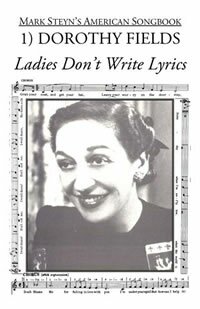 For Dorothy Fields' centenary Mark Steyn produced a 48-page booklet which can be bought at his site. The booklet is cheaply produced but has lots of illustrations. Most importantly it's full of great insights, starting with a short general section and followed by pieces on 20 of her songs. The price includes a copy of the CD An Evening with Dorothy Fields.
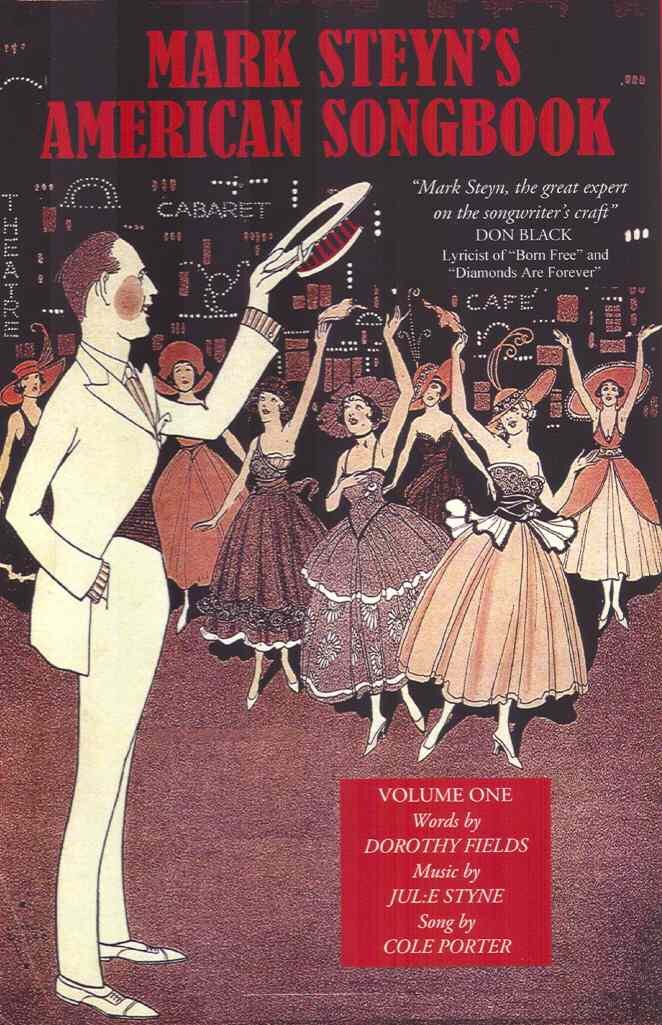 Note (October 2010) : The edition described above is no longer available. However it has been reprinted as part of Mark Steyn's American Songbook which can be obtained from
 Song by Song 14 Great Lyric Writers by Caryl Brahms and Ned Sherrin
| Short essays on 14 lyricists (Berlin, Porter, Gershwin, Hart, Hammerstein, Fields, Dietz, Harburg, Coward, Mercer, Loesser, Lerner, Harnick, Sondheim), packed with information, and some telling anecdotes (reliable old Sherrin) and comments. Published 1984 |
Radio programmes on Dorothy Fields
|
1. In July 2000 National Public Radio paid tribute to Dorothy Fields. The tribute is accessible via the Internet. |
|
2. In June 2002, Angela Richards and I appeared on Woman's Hour to talk about Dorothy Fields. |
|
3. In 2006, Mark Steyn spoke about Dorothy Fields on Australian radio. The interview and a transcipt can be found here. |
TV program on women songwriters
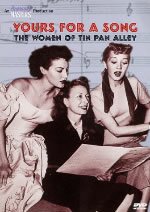 In 1999 PBS broadcast a documentary about women songwriters, in which Dorothy features prominently,now available on both VHS and DVD. The program is called Yours for a Song: The Women of Tin Pan Alley. In 1999 PBS broadcast a documentary about women songwriters, in which Dorothy features prominently,now available on both VHS and DVD. The program is called Yours for a Song: The Women of Tin Pan Alley.
It's a very interesting program, and includes a lot of archive photos and some clips of Dorothy, including her singing Blue Again in the 1930s (with McHugh at the piano) and making a TV appearance on Perry Como's show in the 1950s. |
Stage Door Canteen
| In 1943 Dorothy (along with hundreds of other celebrities) made a guest appearance in this film comedy. |
All rights reserved.......... © Jon Aldous 2006.......... Contact Me